
Last updated November 15, 2026
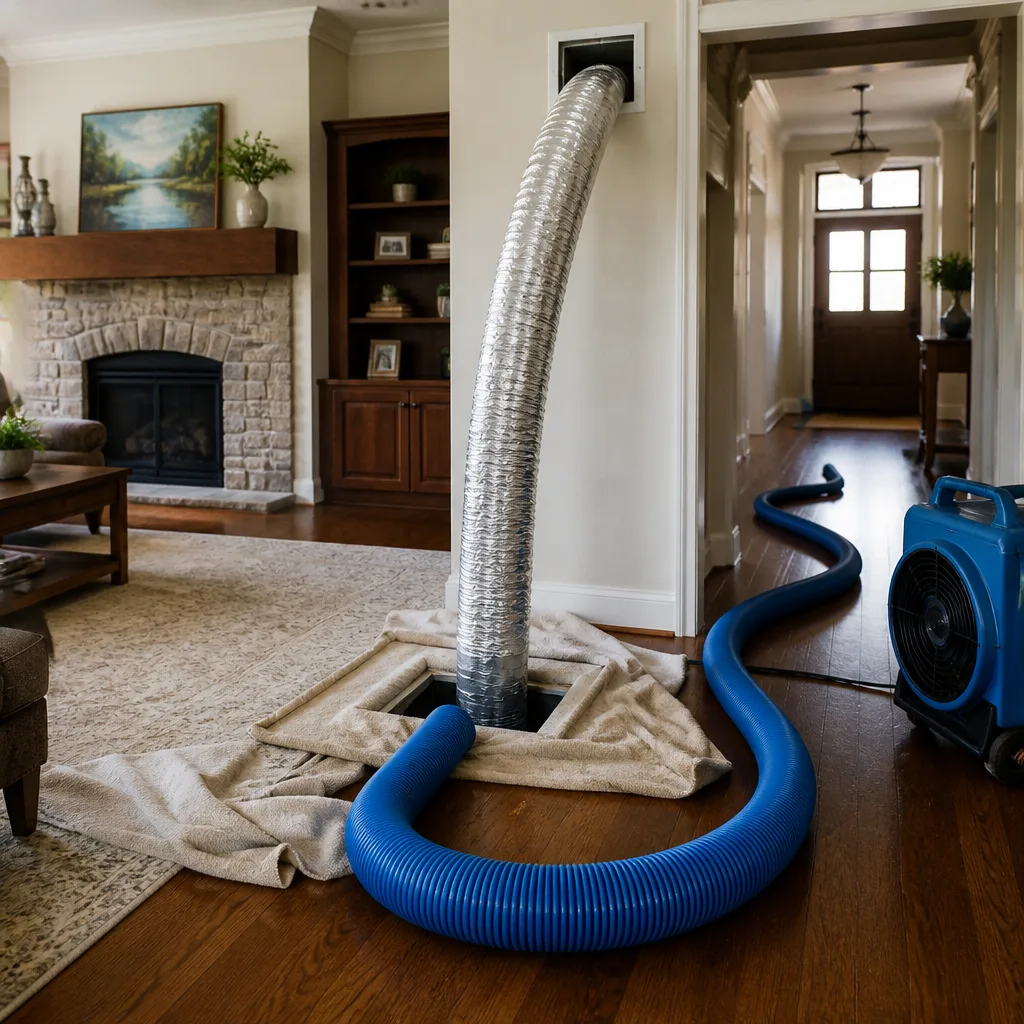 Whole-home duct cleaning
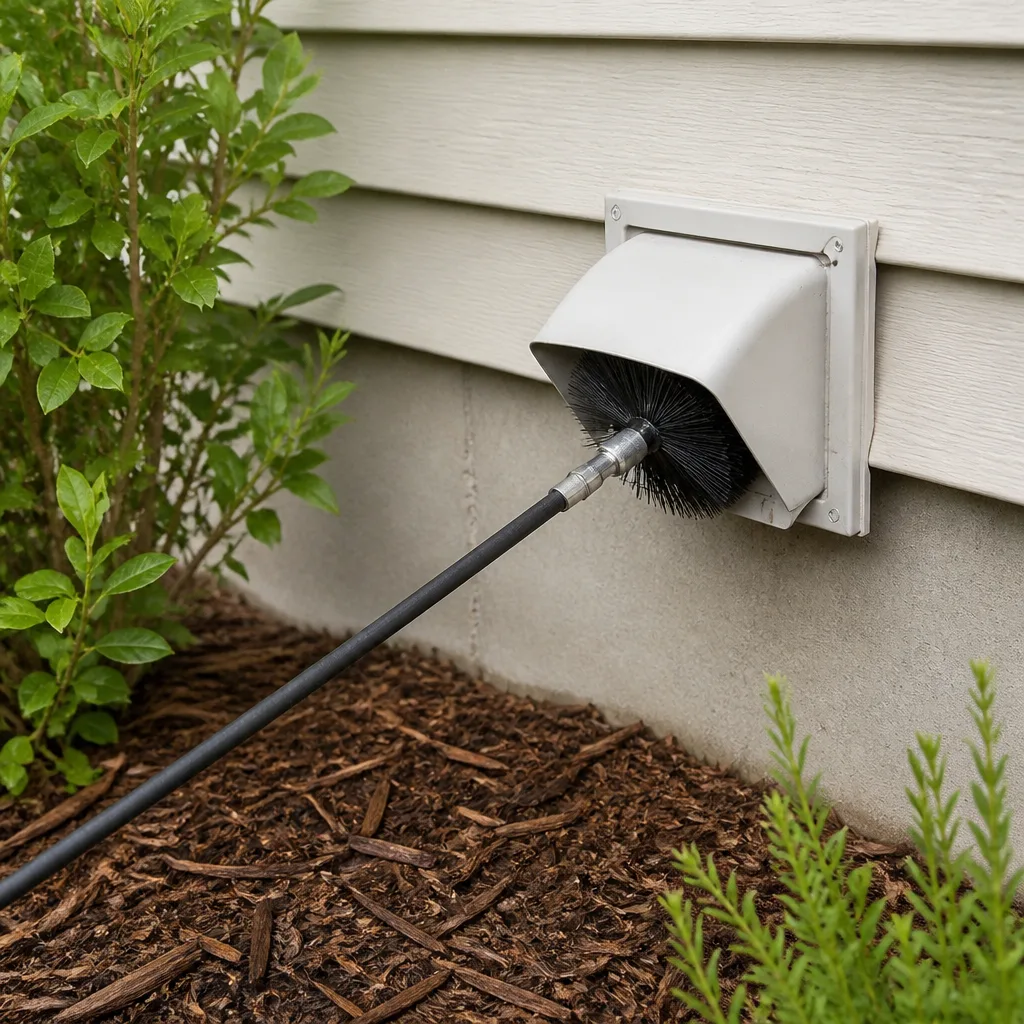 Dryer vent cleaning
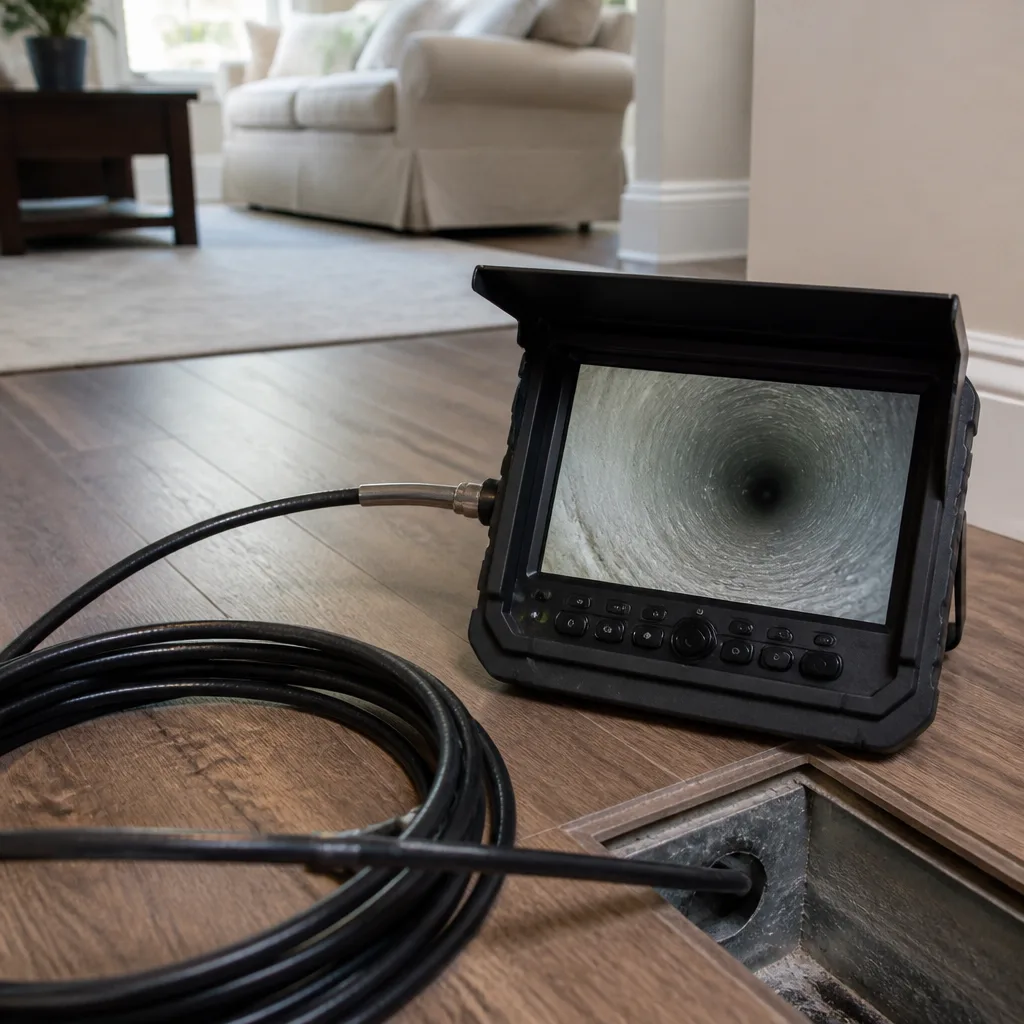 Camera inspection
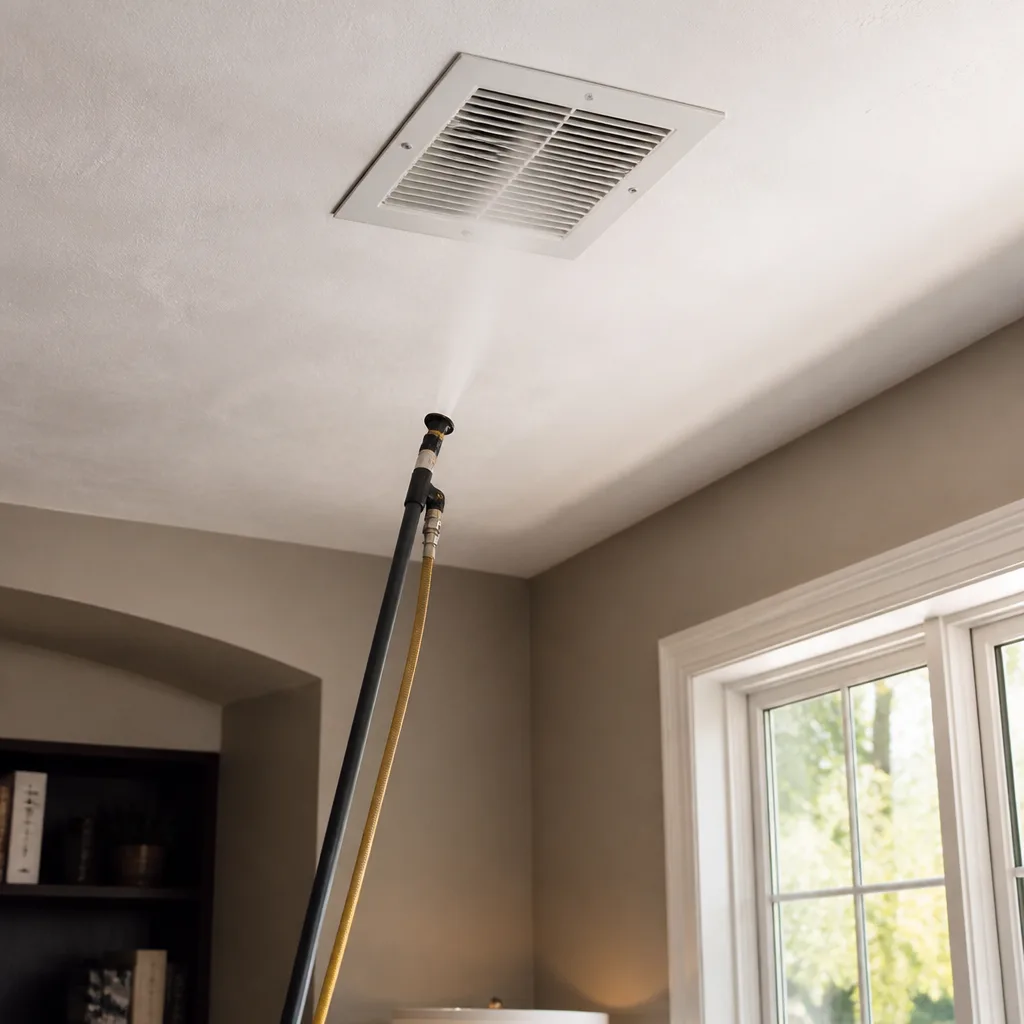 Sanitizing & deodorizing
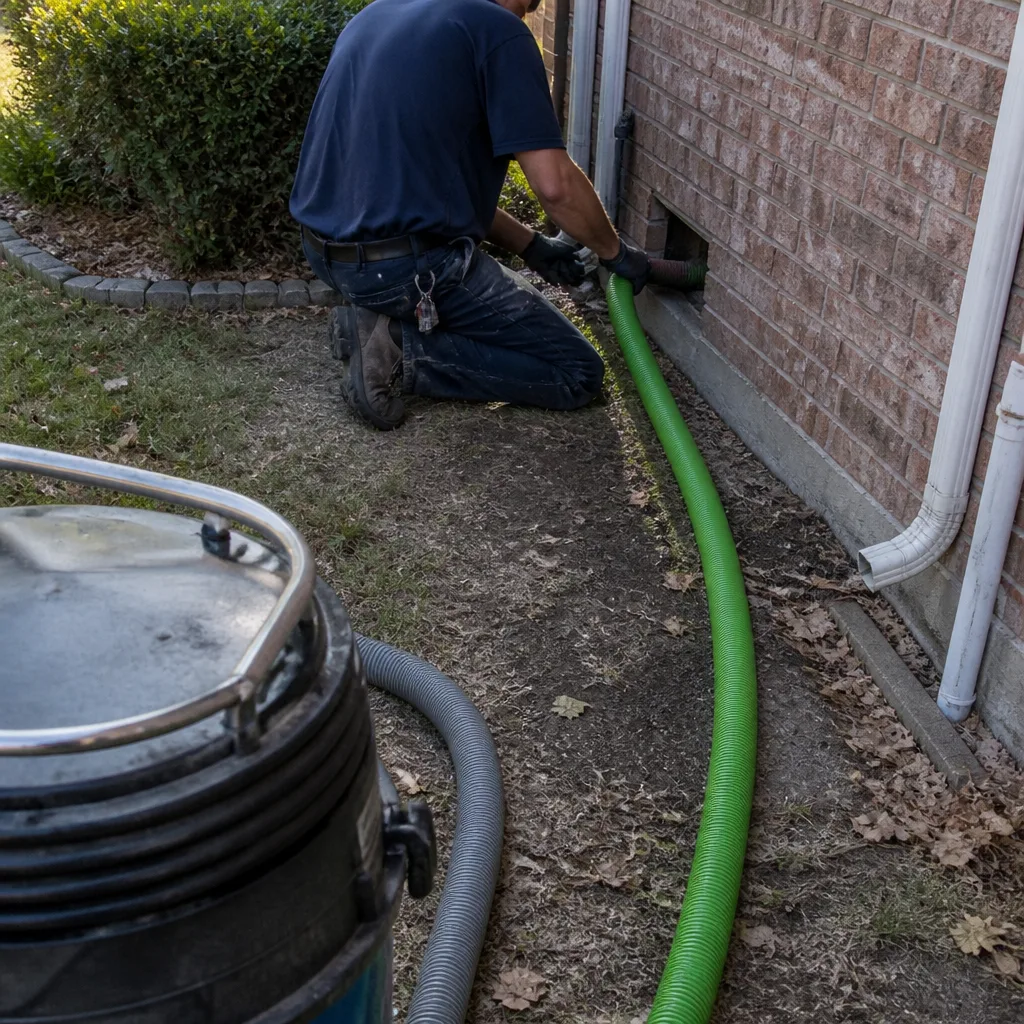
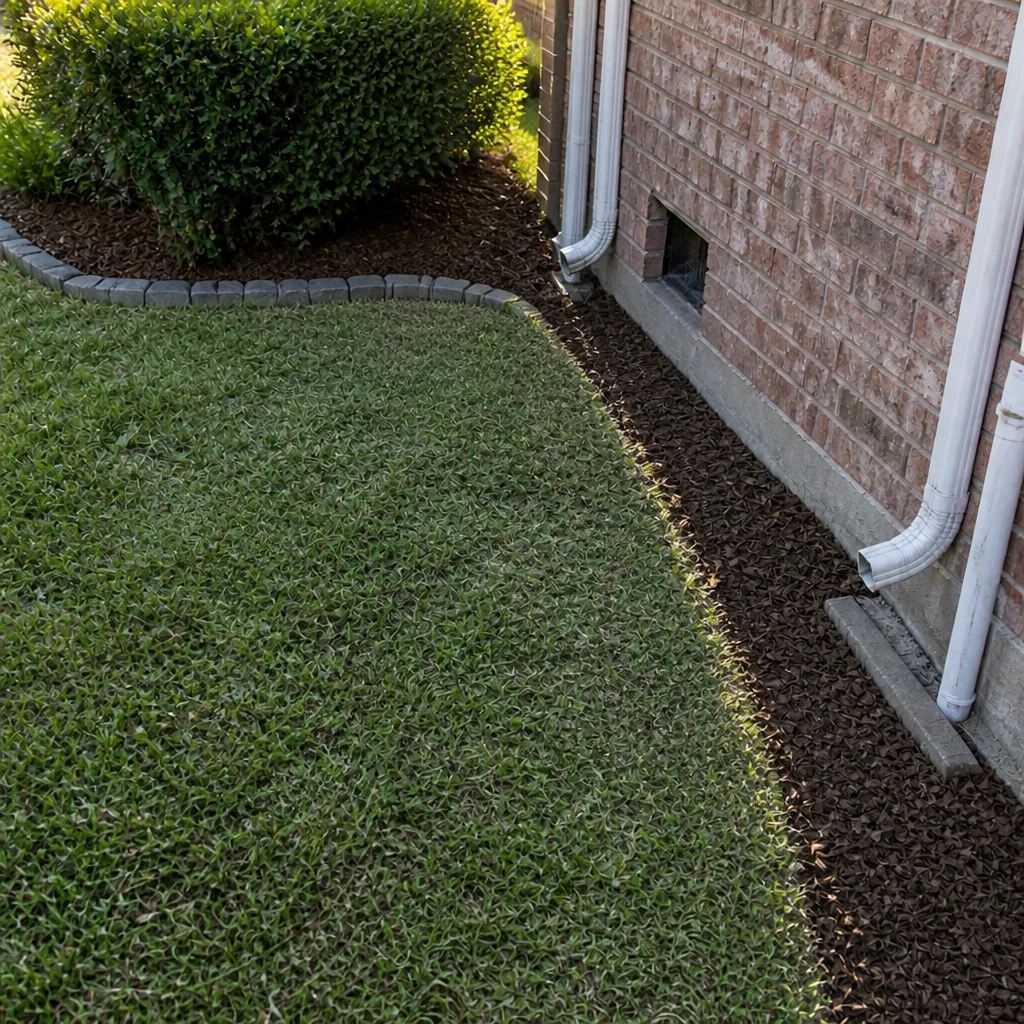
Whole-system duct and dryer vent check with before-and-after photos - you see exactly what came out of your vents
That "$99 whole-house special" is a bait ad - the real number appears once they are in your hallway, or the "clean" is a shop-vac at the register. We photograph the inside of your ducts before and after instead.
Air Duct Cleaning Maintenance Checklist for Allen Homeowners
Changing your filter every 90 days is the most common duct maintenance advice in Allen, and it’s incomplete. Filter condition tells you almost nothing about what’s happening inside the main trunk lines, the branch runs feeding each bedroom, or the return plenum that carries everything back to the air handler. A filter catches what reaches it; it doesn’t tell you whether your ducts are leaking at the joints, whether a flex run collapsed behind the drywall, or whether your dryer vent has been quietly packing lint for two years. What follows is a monitoring routine rather than a cleaning schedule: specific, measurable checkpoints you can perform without tools, plus the documentation that makes any professional inspection faster and more honest. You’ll learn what to check monthly, what to log after a renovation, and when the readings mean it’s time to pick up the phone.
Quick Answer
An Allen homeowner should perform a monthly visual check at supply and return registers, log any airflow changes or post-renovation dust events, and assess dryer vent restriction during the same pass. Full professional duct cleaning is usually warranted every three to five years for most Allen homes, sooner after a remodel, a major storm, or if anyone in the house has asthma or allergies. The checklist below turns that vague timeline into concrete signals you can actually observe.
Styles & brands we work with
- Whole-home duct cleaning
- Dryer vent cleaning
- Camera inspection
- Sanitizing & deodorizing
Table of Contents
- Monthly Visual Checks You Can Do Without Tools
- Tracking Airflow: How to Notice a 15% Drop Before It Strains Your HVAC
- What to Log After a Remodel or Major Storm in Allen
- Assessing Dryer Vent Restriction in the Same Pass
- The Documentation Checklist to Bring to Your Inspection
- The Seasonal Calendar for North Texas Homes
- Reading the Signals: When Monitoring Turns into Action
- Cleaning vs. Repair: What the Checklist Actually Points To
Monthly Visual Checks You Can Do Without Tools
Start with your registers. Every supply and return grille in the house gets a ten-second look. You’re checking for three things: visible dust buildup on the vanes, dark streaking around the edges, and any sign of moisture. Streaking near a register in an Allen home often means air is escaping around a poorly sealed boot, pulling attic or wall-cavity air into the living space. That’s a repair item, not a cleaning item, and it’s exactly the kind of problem a clean-only crew will vacuum right past.
Next, wipe the face of one supply register with a white paper towel once a month. If the towel comes away grey-brown within days of a fresh wipe, contamination is being pushed into the room. If it stays clean for two or three weeks, your system is running reasonably clear at that location. Do the same at the return. Returns are the honest ones: they show you what the system is pulling in from the whole house.
Three more checks round out the monthly pass:
- Listen at the return grille. A steady whoosh is normal. A whistle or a strained hum points to a restriction somewhere in the run.
- Look behind the filter. Fine grey dust accumulating on the blower side of the filter slot means air is bypassing the filter through gaps in the frame. Foam weatherstrip fixes most of these.
- Sniff the return. A musty or “dirty sock” smell at the return is a signal worth logging, especially in Allen’s humid summer months when a duct system with condensation problems will advertise them.
None of this requires opening a panel or removing a grille. It takes ten minutes a month and gives you a baseline to compare against. That baseline is worth more than any published cleaning interval, because it’s about your house.
Tracking Airflow: How to Notice a 15% Drop Before It Strains Your HVAC
Airflow is the part of duct health nobody measures, and it’s the part that costs the most when it slips. A 15% drop in the air reaching a room is easy to miss in daily living but hard on the equipment: the blower works longer, static pressure climbs, and the system runs hotter and louder than it should. You can catch that drop with nothing more than a cheap handheld anemometer held at the register, or with a simpler substitute if you don’t want to buy one.
The no-tool method: hold a strip of tissue paper in front of a supply register and note how far it lifts and how steady the flutter is. Do this at every supply on the same day and compare. If one room’s tissue lifts noticeably less than the others, that run is restricted. If every register lifts less than it did two months ago, the restriction is upstream in the trunk or at the filter. Write the observations in a notebook with a date. Logging is the entire method.
If you prefer a number, a basic anemometer from any hardware store gives you feet per minute at the register face, and that number is what turns a guess into a benchmark. Here’s how to use it:
- Set the baseline. With a clean filter and the system running on the same fan setting, measure every supply register and record the readings by room.
- Measure at the same fan speed every time. Changing fan settings between readings makes the comparison meaningless.
- Measure monthly. A reading that’s fallen roughly 15% or more from the baseline for that same register earns a note and a look upstream.
- Rule out the filter first. A loaded filter will drag every reading down. Replace it, re-measure, and only then decide something deeper changed.
In Allen, the check that matters most is mid-summer. When the system has been running hard for a month, a duct system with a disconnected flex run or a crushed section behind a renovation will show it as a growing gap between rooms. The AC still cools the house, so nothing feels broken, but the equipment is compensating. Catching the gap early is what keeps a small duct leak from becoming a compressor conversation.
What to Log After a Remodel or Major Storm in Allen
Renovations and storms are the two events that change what’s inside your ducts overnight, and they’re also the two events nobody documents. Drywall dust is finer and more abrasive than household dust, and it settles into every horizontal run during a kitchen or bathroom remodel even when the crew seals off the work area. After a storm, wind-driven debris, attic insulation disturbed by roof work, and water that found a path along a duct run all show up the same way: a sudden change in what the returns are pulling.
Log these five items after any remodel or major storm:
- Date and scope of the work. “Kitchen remodel, walls opened, finished June” is enough. Vague notes don’t help later.
- Photo of each supply and return register face taken the week the work finishes. This is your “after” comparison for the streaks and dust you’ll measure later.
- Filter condition within 48 hours of the work ending. If the filter is visibly loaded that fast, duct contamination is the likeliest reason.
- Anemometer readings or tissue-lift observations at every register once the system has run for a day. This is your new baseline after the disruption.
- Any attic or roof work noted separately. Insulation and roofing debris get into return ducts through gaps that predate the storm.
If your home is in one of Allen’s established neighborhoods where the housing stock dates from the 1990s and early 2000s, a remodel often exposes duct runs that were installed with the original build. That’s useful information: it’s the moment to have someone look at the joints and the flex connections while the walls are still accessible. Our technicians have up to 14 years of experience, and the pattern we see most after a renovation is contamination plus a joint that was never sealed properly to begin with.
Assessing Dryer Vent Restriction in the Same Pass
The dryer vent is part of your duct system and should be checked on the same monthly pass, not booked as a separate chore later. A restricted dryer vent is a documented fire risk across the country, and Allen homes with a long run from the dryer to the exterior wall, or one with several elbows, are the ones where lint accumulates fastest. You don’t need tools to assess it for most of the year.
Three checks, done together:
- Time a load. A normal load should dry in roughly the time it always has. If your standard load is suddenly taking significantly longer, the vent is the first thing to suspect, before the dryer itself.
- Feel the exterior vent flap while the dryer runs. Strong, steady airflow and a flap that lifts fully is what you want. Weak airflow, a flap that barely moves, or lint visible around the hinge means restriction.
- Touch the flexible transition duct behind the dryer after a load. It should be warm, not hot. A hot transition duct with a longer-than-usual dry time is a restriction you should have looked at.
One caution: the transition duct behind the dryer is a common place for kinks, and some installations use a foil or plastic transition that crushes easily. Straightening a crushed transition is a small task, but going further into the wall or the exterior run is where the fire risk lives. That’s a job for a professional, and dryer vent cleaning is one of the three services we handle for that reason. Checking the vent monthly and having it cleaned on a schedule you actually follow is the routine that matters.
The Documentation Checklist to Bring to Your Inspection
Most duct inspections start from zero because the homeowner has no records. The inspector looks, forms an opinion, and the homeowner has no way to check the recommendation against anything. Bring your own documentation and the conversation changes. Our technicians use professional-grade equipment from Rotobrush and Nikro because that’s what a thorough inspection requires, but the best equipment still works from your records about how the system has behaved.
Assemble this before any professional visit:
- Your register readings or tissue-lift notes with dates. Even a rough notebook list helps.
- Photos of each register taken at the start of your monitoring, so the inspector can see what changed.
- Filter change dates and the filter’s MERV rating. A high-MERV filter in a system not designed for it creates the exact airflow restriction you’re trying to diagnose.
- A list of any remodeling, roof work, or storm events and the dates.
- Dryer dry-time observations. How long a standard load takes has become is a real diagnostic signal.
- Any symptoms in the house: musty smells, dust returning quickly after cleaning, rooms that heat or cool unevenly.
Homes that already use air duct cleaning or a filtration setup from Honeywell or Aprilaire have a head start, because those systems normally come with service records. Gather those too. The point isn’t paperwork for its own sake. It’s that a documented system gets a documented answer, and it’s much harder for anyone to sell you a service you can prove you don’t need.
The Seasonal Calendar for North Texas Homes
Allen’s climate does the calendar work for you if you listen. Winters here are mild, which means the system’s hardest months are the long cooling season rather than a deep freeze, and the checkpoints that matter cluster around the transitions into and out of the heat.
- Early spring, before the first cooling stretch. Replace the filter, do a full register check, and take your seasonal baseline readings. This is the most important pass of the year.
- Mid-summer. Re-measure airflow and compare against spring. This is when a small restriction shows up as a real gap between rooms. Check the dryer vent flap more frequently during the hot months, since a hot garage or utility room makes a restricted vent work harder.
- Early fall. Clean and inspect the return path, replace the filter, and re-measure. If the readings have drifted since spring, log it now so you’re not discovering it in July.
- Winter. Allen’s mild winters mean less heating load, which makes this the easiest season for a full professional inspection if one is due. It’s also a good window for air duct repair, since the system runs less and a short downtime matters less.
There’s no calendar date that says “clean your ducts.” The calendar is a reminder to measure. In our experience, the homeowners who get the most out of a duct service are the ones who know what their system looked like a season ago.
Reading the Signals: When Monitoring Turns into Action
Monitoring is only useful if you act on what it tells you. Here are the signals that mean the checklist has done its job and it’s time to bring in professional equipment:
- Two consecutive months of falling register readings at several rooms after a fresh filter. That points upstream to the trunk lines or the plenum.
- Visible dust returning within days of a wipe at multiple registers, not just the one nearest the return.
- A musty smell at the return that persists after a filter change.
- Dryer loads taking noticeably longer with weak exterior vent airflow. This one is a safety item; don’t let it slide.
- Post-renovation contamination showing on every register within a day or two of the work.
When two or more of these line up, an inspection will tell you whether you’re looking at cleaning, repair, or both. That distinction is where the professional equipment earns its place. Rotobrush and Nikro systems do the cleaning properly, and a real inspection with them is what catches a crushed flex run or a disconnected joint before it becomes a bigger repair. That’s the standard for a professional inspection, and it’s the standard we hold on every job.
Cleaning vs. Repair: What the Checklist Actually Points To
The checklist you’ve been keeping is a diagnostic tool as much as a cleaning reminder, and it can usually tell you which kind of problem you have. The pattern is fairly consistent:
- Uniform dust everywhere, no airflow gaps, musty smell in older homes: a cleaning case. Contamination has built up over years and the system needs a proper cleaning with professional equipment.
- One room weak, others fine: a repair case. There’s a restriction or a leak in that run.
- Dust that returns fast, streaks at the registers, a filter loading in days: likely both. Cleaning without sealing the leak means the dust comes back, which is a large part of why some homeowners feel a cleaning “didn’t take.”
That’s the reason we offer air duct repair alongside cleaning. Most companies clean. We also repair, because a checklist that points to a structural problem deserves an answer beyond a vacuum. If your readings or notes point to a leak, a crushed run, or a disconnected joint, repair is the fix that makes the rest of the work hold. Duct Cleaning Allen handles all three services under one call, and starting with a free estimate means you know which one you’re looking at before any work starts.
Common Mistakes to Avoid
- Treating the filter as the whole maintenance plan. A clean filter says nothing about the trunk lines, the branch runs, or the dryer vent. The monthly register pass is the check that matters.
- Skipping the airflow log because “the AC still works.” A system compensating for a partial restriction keeps the house cool while working harder. The room-to-room gap is the early warning, and it’s invisible without a baseline.
- Never logging a remodel or storm. Drywall dust and storm debris settle in horizontal runs, and the event itself is the trigger for a check. Homeowners in Allen who remodel without logging it later can’t tell a normal year from a contaminated one.
- Judging the dryer vent by how the dryer “seems” to run. Long dry times and weak exterior airflow are the honest signals. The lint behind the transition duct is the risk, and that part is not a DIY area in most homes.
- Buying a cleaning on the strength of a coupon price with no inspection first. A low teaser price that grows once the technician is on site is the classic bait-and-switch in this trade. Ask for one flat price per system agreed before work starts, and for before-and-after photos of your own ducts.
- Assuming a cleaning fixed a leak. If a run is disconnected or crushed, cleaning makes it clean and the dust returns in a matter of weeks. A system that has structural problems needs repair.
- Not keeping records at all. Without a baseline, every inspection starts from zero and the homeowner has no way to check a recommendation against their own house.
See the difference
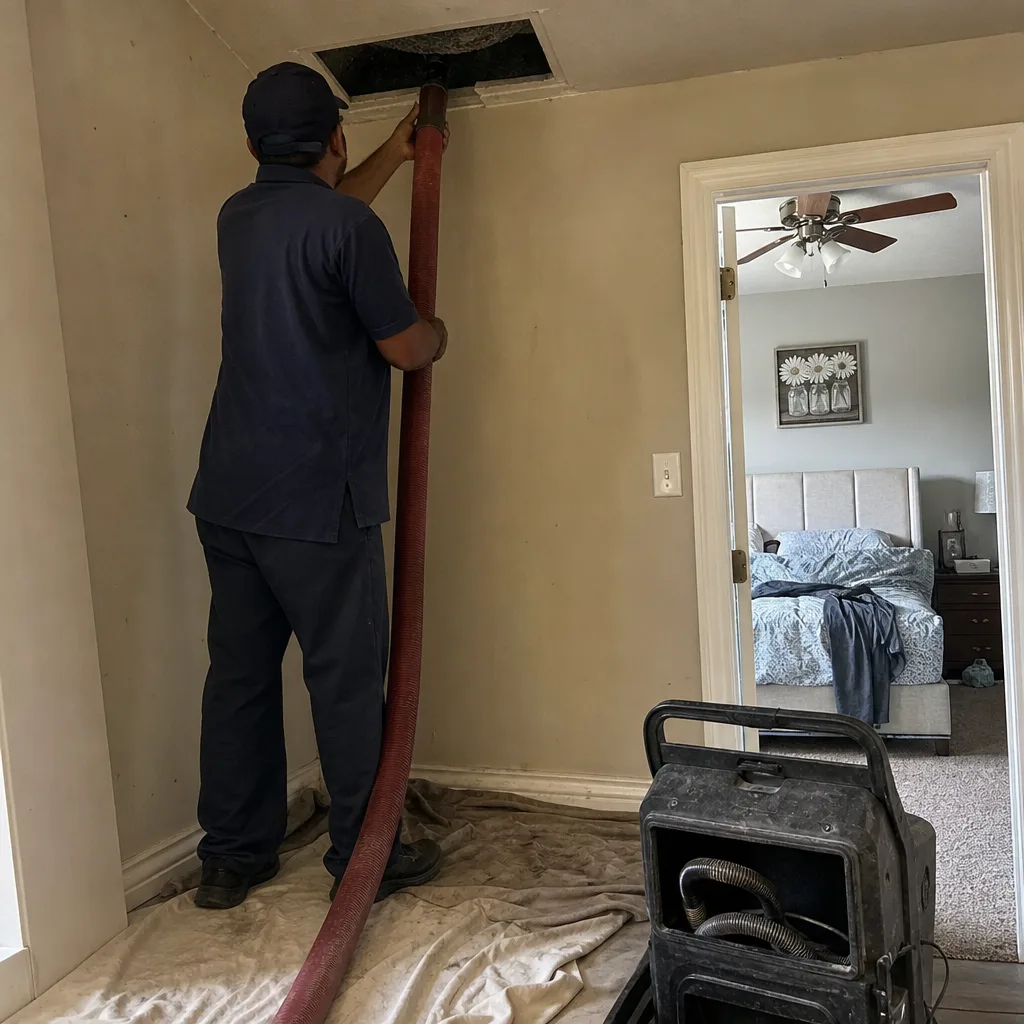 Before
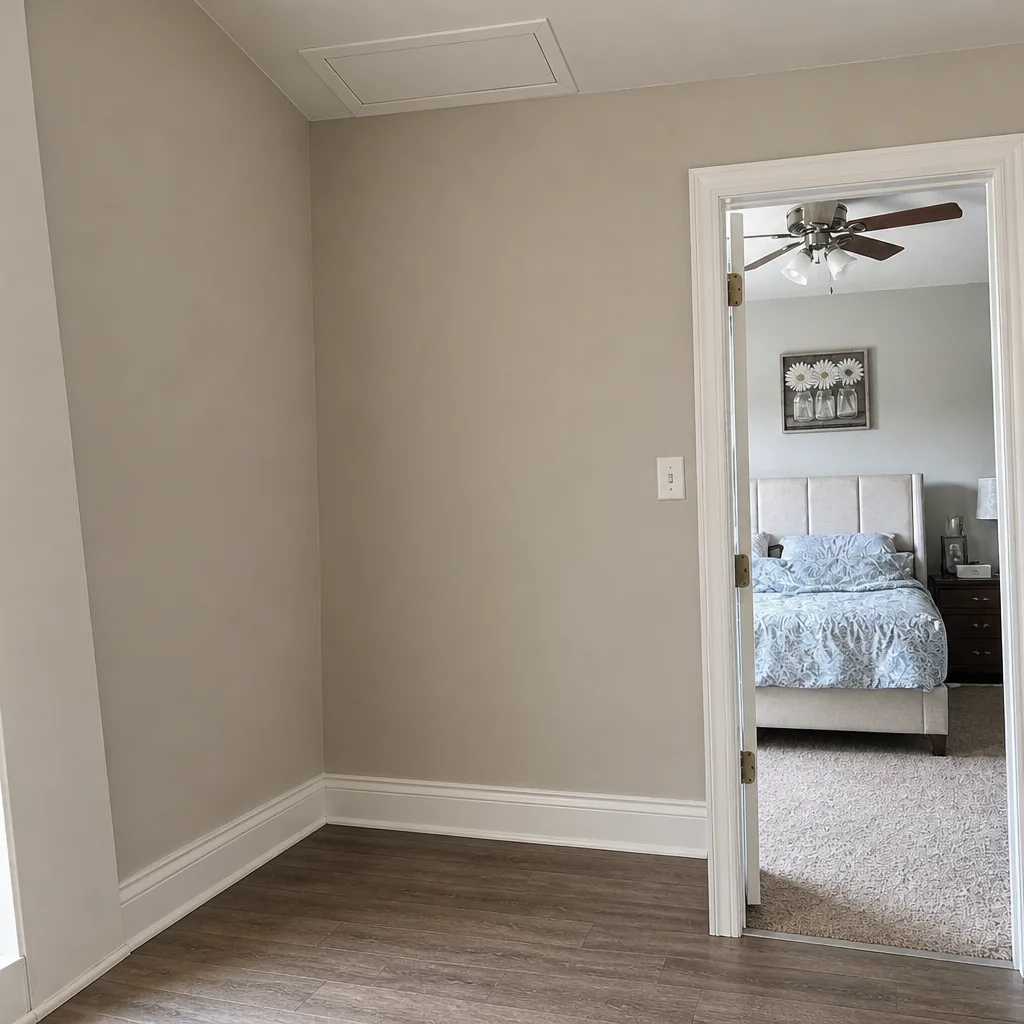 After
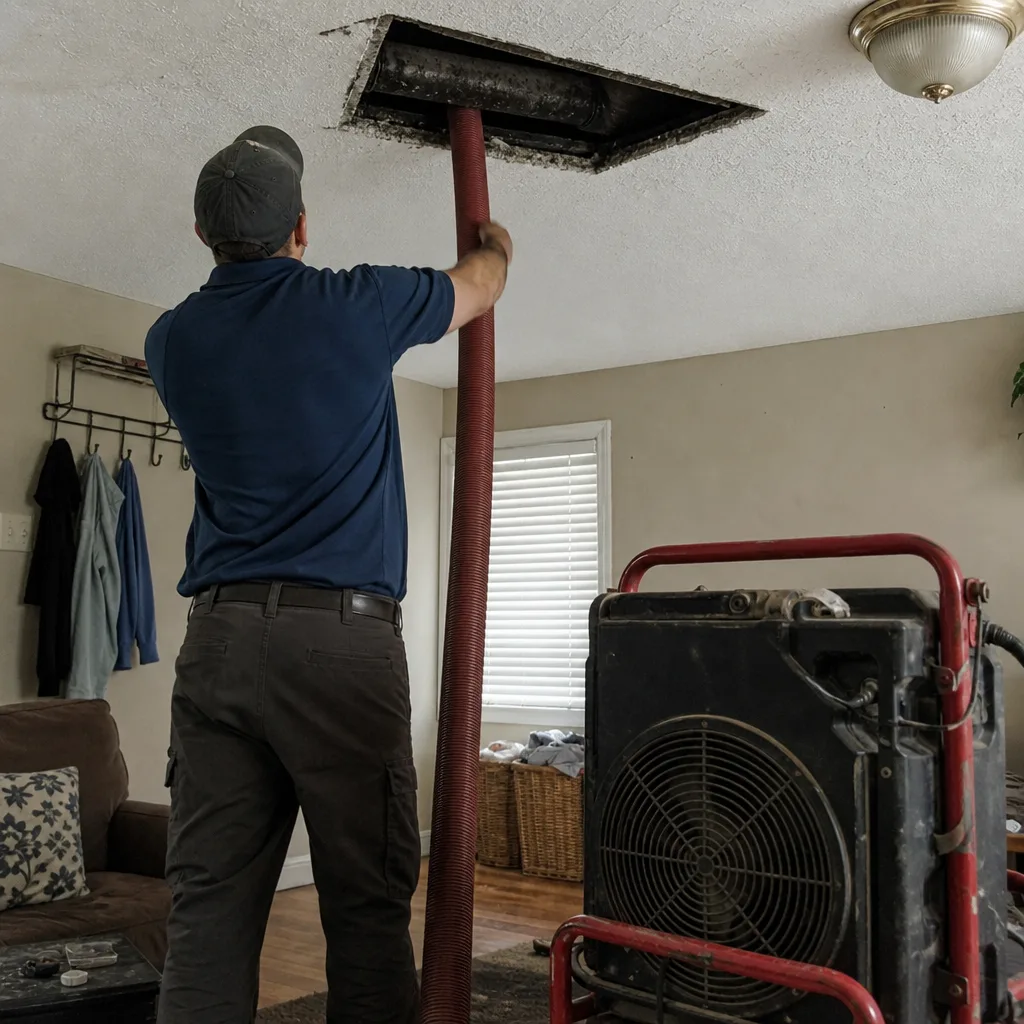 Before
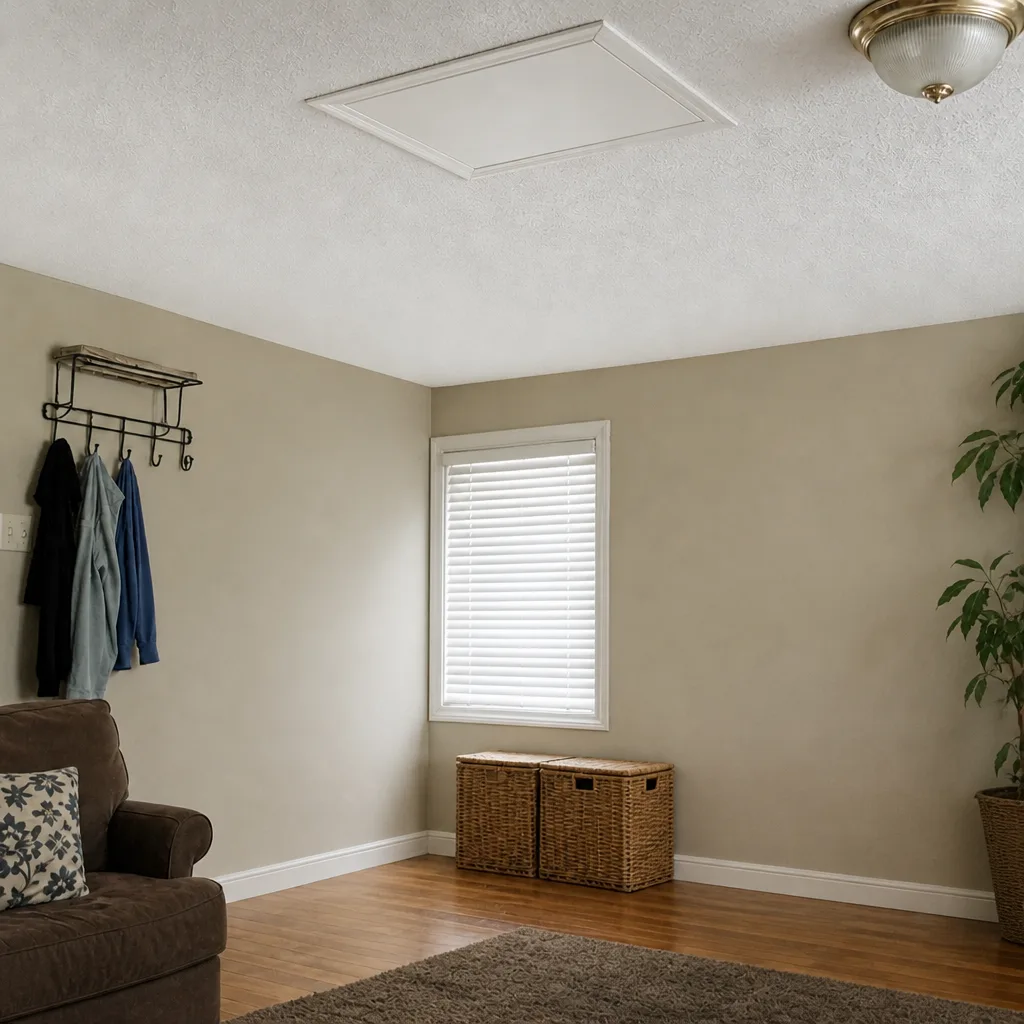 After
 Before
 After
When to Call a Professional
Call a professional when the checklist gives you a signal you can’t fix at the register: two or more register readings falling after a fresh filter, dust that returns within days of a wipe, a musty smell at the return, or dryer loads getting longer with weak exterior vent airflow. Call sooner if anyone in the house has asthma or allergies, if your home has had a renovation or major storm within the past year, or if an annual cleaning is simply due and you’d rather know your system’s actual condition than guess. Duct Cleaning Allen offers free estimates in Allen and works with professional equipment from Rotobrush, Nikro, and Abatement Technologies for the full scope of duct cleaning, dryer vent cleaning, and duct repair. Call (866) 452-2744. We answer 24/7. Fast dispatch from 7am to 7pm, Sunday through Friday.
Frequently Asked Questions
Most Allen homes need professional air duct cleaning every three to five years, sooner after a remodel, a major storm, or if anyone in the house has asthma or allergies. The monitoring checklist can shorten or extend that interval based on what you observe, because it’s the register readings and dry time that tell you when the contamination level has changed.
Call (866) 452-2744 for an exact quote. Estimates are free.
Look at every supply and return register for dust streaks and moisture, wipe one register with a white paper towel to see how fast dust returns, listen for whistling at the return, and check the dryer vent’s exterior airflow and dry time. The whole pass takes about ten minutes and requires no tools.
Airflow that is noticeably weaker in one room than the others, dust streaks around a register frame, and dust returning within days of a wipe are the usual signs. Comparing register readings across rooms on the same day will show a leak or restriction as a gap between rooms rather than a uniform drop across the whole house.
Yes. The dryer vent is ductwork, and lint restriction is a documented fire risk, not just a comfort issue. Check your exterior vent flap and dry time in the same monthly pass you use for the registers, and have the vent cleaned professionally if the flap lifts weakly or loads take noticeably longer.
Bring your register readings or notes with dates, photos of each register from before the visit, filter change dates and MERV rating, a list of any remodels or storms with dates, and your dryer dry-time observations. Older Allen homes with an inspection history from a previous service can bring those records too, and any filtration paperwork from Honeywell or Aprilaire systems.
A typical whole-system cleaning runs in a range that depends on system size, the number of registers, and whether repair is needed, and a written estimate sets the final price. Ask for one flat price per system agreed before work starts and before-and-after photos of your own ducts; a quote that grows once the technician is on site is the pattern to walk away from.
Call (866) 452-2744 for an exact quote. Estimates are free.
The Bottom Line
Duct maintenance in Allen isn’t a seasonal reminder you set and forget. It’s a monitoring routine: a monthly register check, an airflow baseline you review and compare, a log after every remodel or storm, a dryer vent check folded into the same pass, and a record you can bring to any inspection. Those five checkpoints tell you whether your ducts are fine, whether they need cleaning, or whether they need repair, and they tell you early enough to act before the system strains. Keep the notes. Read the signals. Call when two or more line up. Better air starts with knowing what’s actually inside your ducts, and the checklist is how you find out.
Written by the team at Duct Cleaning Allen.